
Tribal Gaming Today: Navigating Sovereign Authority, Federal Law, and the Sports Betting Surge
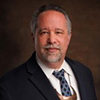
William Norman has been a partner with Hobbs, Straus, Dean & Walker, LLP since January 2000. Mr. Norman joined Hobbs Straus in 1994, following a two-year clerkship with the U.S. Court of Appeals for the Third Circuit in Philadelphia, Pennsylvania. Mr. Norman's practice focuses on promoting and defending the rights of Indian tribes and tribal organizations. He advises tribal governments, their agencies, and enterprises on tribal governmental and business infrastructure, from drafting tribal laws to negotiating complex financing transactions.
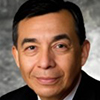
Kirke Kickingbird, a member of the Kiowa Tribe and Kiowa Gourd Clan, has devoted his professional career to helping Indian people get interpretations of the law that will benefit their personal interests as well as the interests of tribal governments. His expertise has enabled him to work effectively in legal, political, academic, and business arenas in order to ensure that the Indian viewpoint is taken seriously.
2 hour CLE
Get this course, plus over 1,000+ live webinars.
Learn More
Program Summary
What will you learn
Attorneys will learn how the IGRA structures tribal gaming authority, game classifications, compact requirements, and the legal conflicts surrounding mobile sports betting expansion.
What will you gain
Attorneys will gain practical knowledge to advise on tribal-state compact negotiation, federal gaming compliance, and strategies for addressing emerging competitive threats to tribal gaming operations.
Key topics to be discussed:
- Gaming History
How tribal sovereignty litigation led to the IGRA's enactment in 1988. - Game classification
Distinctions between Class I, Class II, and Class III gaming under federal law. - Federal oversight
NIGC authority, standards, and limitations on tribal gaming operations. - Compact process
Negotiation, approval, revenue sharing, and enforcement of tribal-state compacts. - Mobile wagering
Post-PASPA sports betting expansion and tribal online gaming implications. - Competitive threats
Prediction markets and sweepstakes sportsbooks challenging tribal gaming exclusivity.
This course is co-sponsored with myLawCLE.
 Closed-captioning available
Speakers
William R. Norman, Jr., Partner | Hobbs, Straus, Dean & Walker, LLP
William Norman has been a partner with Hobbs, Straus, Dean & Walker, LLP since January 2000. Mr. Norman joined Hobbs Straus in 1994, following a two-year clerkship with the U.S. Court of Appeals for the Third Circuit in Philadelphia, Pennsylvania. Mr. Norman’s practice focuses on promoting and defending the rights of Indian tribes and tribal organizations. He advises tribal governments, their agencies, and enterprises on tribal governmental and business infrastructure, from drafting tribal laws to negotiating complex financing transactions. William has wide-ranging experience as a trusted legal advisor and counselor to tribal leadership on matters spanning from assisting leaders in improving tribal citizen/member services to advocating at the highest levels of federal and state government on their behalf.
- Education and Credentials
William Norman earned his J.D. from the University of Oklahoma (1992) and a B.B.A. from the University of Central Oklahoma (1989). He is admitted to practice before the United States Supreme Court, multiple federal appellate and district courts, and the Oklahoma and District of Columbia bars, as well as several tribal courts. His credentials reflect extensive experience across federal, state, and tribal legal systems.
- Recognition and Leadership
William has received notable recognition for his work in Native American and gaming law. He was named Best Lawyers® 2026 “Lawyer of the Year” in Gaming Law and Native American Law in Oklahoma City and is listed as an Oklahoma Super Lawyer in Native American Law. He also serves as Associate Justice for the Miami Tribe of Oklahoma Appellate Court, reflecting his leadership in tribal jurisprudence.
- Professional Involvement
William has been actively engaged in professional and community organizations throughout his career. He serves as Vice Chair of the Indigenous Law Committee of the ABA Section of Environment, Energy, and Resources and is a member of the Oklahoma Indian Bar Association and the American Indian Chamber of Commerce of Oklahoma. He has also served on the boards of several nonprofit organizations supporting Native communities.
- Experience
A partner at Hobbs, Straus, Dean & Walker, LLP since 2000, William focuses on protecting and advancing the rights of Indian tribes and tribal organizations. He advises tribal governments on economic development, and gaming matters, including ordinance development, financing transactions, compact negotiations, and regulatory compliance. His work also includes advocacy before federal and state governments and litigation involving tribal sovereignty and tribal lands.
Kirke Kickingbird, Of Counsel | Hobbs, Straus, Dean & Walker, LLP
Kirke Kickingbird, a member of the Kiowa Tribe and Kiowa Gourd Clan, has devoted his professional career to helping Indian people get interpretations of the law that will benefit their personal interests as well as the interests of tribal governments. His expertise has enabled him to work effectively in legal, political, academic, and business arenas in order to ensure that the Indian viewpoint is taken seriously. In his work, Kirke has provided training and technical assistance to more than 150 tribal governments within the United States and Canada, and has worked with the United States government and world experts on international treaty issues affecting indigenous people. Kirke joined the firm in 2000 and today is working on gaming issues for Oklahoma tribes and tribal government reform.
- Education and Credentials
Kirke Kickingbird earned both his B.A. (1966) and J.D. (1969) from the University of Oklahoma. He is admitted to practice law in Oklahoma and the District of Columbia (inactive). His academic background laid the foundation for a career dedicated to advancing tribal law, governance, and policy.
- Recognition and Leadership
He served as Chief Justice of the Supreme Court of the Cheyenne and Arapaho Tribes of Oklahoma and as Chairman of the Oklahoma Indian Affairs Commission. In 1995, he was appointed Special Counsel on Indian Affairs to Oklahoma Governor Frank Keating, advising on policy and legal matters affecting tribal governments.
- Professional Involvement
His roles include serving on the Board of Governors of the American Bar Association, President of the Native American Bar Association, and Chair of the Native American Resources Committee within the ABA Section of Environment, Energy and Resources. He has also contributed to legal scholarship and policy through his leadership with the Institute for the Development of Indian Law.
- Experience
Kirke has spent decades advocating for tribal interests across legal, academic, and governmental arenas. He has provided training and technical assistance to more than 150 tribal governments in the United States and Canada and currently advises Oklahoma tribes on gaming, governance reform, constitutional revisions, and legislative matters. His work bridges tribal communities, policymakers, and national institutions to advance tribal sovereignty and development.
Agenda
Session 1 – Tribal Self-Determination to the IGRA: History of Tribal Government Gaming | 1:00pm – 1:30pm
Trace the legal evolution of tribal gaming from early sovereignty disputes through landmark litigation, including California v. Cabazon Band, culminating in Congress’s enactment of the Indian Gaming Regulatory Act and its foundational limitations on tribal gaming operations nationwide.
Session 2 – Understanding the IGRA: Structure of Tribal Government Gaming | 1:30pm – 2:00pm
Explore the IGRA’s regulatory architecture, including Indian lands definitions, game classification distinctions, NIGC oversight authority, Class II gaming controversies, Class III compact negotiation and enforcement mechanics, and the emerging implications for tribal online and mobile gaming operations.
Break | 2:00pm – 2:10pm
Session 3 – Mobile Betting: Opportunities and Threats to Tribal Government Gaming | 2:10pm – 3:10pm
Examine post-PASPA sports betting expansion, federal laws affecting tribal wagering, the West Flagler decision’s impact, Interior’s updated compacting regulations, and growing competitive threats from sports prediction market platforms and sweepstakes sportsbooks targeting tribal gaming exclusivity.
Preview
More CLE Webinars
Trending CLE Webinars










Upcoming CLE Webinars

© 2026 Breaking Media, Inc