
Inside AI Training: Copyright Liability from Shadow Libraries to RAG Outputs

Miranda Means is a partner in the Boston office of Kirkland & Ellis LLP, where her practice spans litigation and counseling across copyright, trade secret, trademark, right of publicity, art, internet, and advertising law. She represents clients in disputes touching a remarkable breadth of media—social media, video games, fine art, sports, music, and film—and the technologies reshaping them, from artificial intelligence and computer software to consumer electronics.
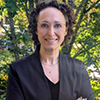
Zahr K. Said is a Professor of Law at Santa Clara University School of Law, where her scholarship sits at the intersection of copyright, artificial intelligence, and the interpretive questions at the heart of intellectual property disputes. A nationally recognized voice on the role of the jury in IP litigation and on how courts read and construe creative works, Professor Said brings an unusually interdisciplinary lens to legal questions—grounded in advanced training in comparative literature as well as law.
2 hour CLE
Get this course, plus over 1,000+ live webinars.
Learn More
Program Summary
Most of the legal risk in AI isn't about how a system was built. It's about what the system does once it's running. When an AI tool spits back a paywalled article, generates an image that looks just like a copyrighted one, or pulls live text into its answer, that copying happens after the model is trained — and that's exactly where the law is least settled.
The first real decisions have now landed. Across 2025 and 2026, courts have treated AI training differently depending on whether the underlying works were lawfully bought or pirated, allowed claims that image generators encouraged infringement, and let the New York Times move its case against OpenAI forward.
If you advise anyone who builds an AI product, a business that has rolled out an AI tool, or a creator whose work keeps resurfacing in AI outputs, your client may already be exposed — usually under contracts and risk assumptions written before any of these rulings existed.
This session walks through where copying can happen at each stage, then turns to the two questions that decide most output cases: does the result look too much like the original, and does it compete with the original in the market? From there it covers the specialized rules these fights run on — the DMCA claims for stripped or altered copyright-owner information, the safe harbor that can shield platforms, the discovery battles over retrieval logs and prompt histories, and the standard for getting (or keeping out) expert testimony. You'll leave able to locate liability step by step and handle the technical evidence questions with confidence.
What Will You Learn
Attorneys will learn how Bartz v. Anthropic, Kadrey v. Meta, Andersen v. Stability AI, and the Supreme Court's Cox Communications decision interact to define current contributory and direct liability.
What Will You Gain
Attendees will leave able to identify discrete infringement events at each pipeline stage, evaluate fair use arguments for training versus acquisition versus outputs, and tackle discovery issues.
Key topics to be discussed:
- Terminology
Core generative AI terms: models, training, fine-tuning, inference, retrieval-augmented generation, and outputs. - Post-training risks
Copyright risks that arise after training. - Runtime retrieval
Distinct copyright questions raised by retrieval during inference, including potential copying and defenses. - Output theories
Output-based infringement theories: substantial similarity, regurgitation, derivative-work arguments, fair use, and market substitution. - CMI claims
Copyright management information and DMCA § 1202 claims in generative AI systems. - Emerging litigation
Post-training litigation: Getty, Disney v. Midjourney, and NYT v. Microsoft and OpenAI.
This course is co-sponsored with myLawCLE.
 Closed-captioning available
Speakers
 Miranda Means, Partner | Kirkland & Ellis LLP
Miranda Means is a partner in the Boston office of Kirkland & Ellis LLP, where her practice spans litigation and counseling across copyright, trade secret, trademark, right of publicity, art, internet, and advertising law. She represents clients in disputes touching a remarkable breadth of media—social media, video games, fine art, sports, music, and film—and the technologies reshaping them, from artificial intelligence and computer software to consumer electronics. Miranda is perhaps best known for her role in the first AI copyright fair use case in U.S. legal history, work for which American Lawyer named her a “Litigator of the Week.” She pairs a sharp litigation record with a deep commitment to inclusivity and pro bono service, including matters advancing LGBTQ+ rights.
- Education & Credentials
Miranda earned her J.D. magna cum laude from Harvard Law School in 2017, where she was a Dean’s Scholar in Copyright; Music and Digital Media; Legal Writing and Research; and the Fashion Law Lab. She served as Articles Editor and on the Submissions Committee of the Harvard Journal of Sports and Entertainment Law, was a Teaching Fellow for Professor William Fisher’s CopyrightX, and worked as a student attorney with both the Prison Legal Assistance Project and the Cyberlaw Clinic at the Berkman Center for Internet & Society. She received her B.A. in English Language and Literature with Honors from the University of Chicago in 2014, where she was elected to Phi Beta Kappa and named to the Dean’s List every quarter. She is admitted to practice in Massachusetts (2020) and New York (2018) and before the U.S. Courts of Appeals for the Second, Third, Sixth, and Eleventh Circuits, as well as the U.S. District Courts for the District of Massachusetts and the Southern District of New York.
- Recognition & Leadership
Miranda was recognized by American Lawyer as a “Litigator of the Week” for her work on Thomson Reuters v. ROSS Intelligence, the first decision in U.S. legal history addressing the use of copyrighted material to train an AI model. She was named a Super Lawyers “Rising Star” each year from 2020 through 2024. Within the American Bar Association’s Section of Intellectual Property, she served as Vice Chair of the Visual Arts and Dramatic Works Committee from 2023 to 2024.
- Professional Involvement
Miranda is an active member of the American Bar Association Section of Intellectual Property and the International Trademark Association (INTA), where she served on the Internet Committee’s Internal Communications and Research Subcommittee. She is a frequent speaker on intellectual property and emerging technology, with recent engagements including a panel on “Lawyering and AI” at Columbia Law School, an IP Law Update panel at Lavender Law’s IP Law Institute, and guest lectures on tattoo copyright and video game IP at New England Law, Harvard Law School, and UCLA Law. Her published work includes articles in the New York Law Journal and the ABA’s Landslide. She is also dedicated to pro bono work, including matters protecting LGBTQ+ rights.
- Experience
Miranda has built a litigation record across many of the most closely watched IP disputes at the intersection of media and technology. She won summary judgment for Thomson Reuters and West Publishing in Thomson Reuters v. ROSS Intelligence, the landmark ruling holding that copying copyrighted material to train a competing AI model was not fair use. She secured a complete victory for Astronics Test Systems in a multi-front patent, copyright, and state-law dispute against Teradyne—prevailing on motions to dismiss, invalidating a patent through inter partes review, and winning a fair use ruling later affirmed on appeal. In the video game arena, she won a jury trial for 2K Games in Hayden v. 2K Games concerning the depiction of NBA players’ tattoos and successfully defended Take-Two in related tattoo-copyright and trademark matters, including disputes over WWE 2K, Red Dead Redemption 2, and Grand Theft Auto: Vice City.
Her broader practice includes defending Facebook in trademark litigation, representing a leading consumer electronics company through a Second Circuit affirmance, and handling trade secret and Computer Fraud and Abuse Act claims for clients such as Apollo Aviation Group and Dow Chemical. On the transactional and counseling side, she represents Vista Equity Partners in worldwide trademark prosecution and enforcement, conducts trademark clearance across industries ranging from pharmaceuticals to professional athletics, and advises clients on artificial intelligence policy and enforcement.
 Zahr K. Said, Professor of Law | Santa Clara University
Zahr K. Said is a Professor of Law at Santa Clara University School of Law, where her scholarship sits at the intersection of copyright, artificial intelligence, and the interpretive questions at the heart of intellectual property disputes. A nationally recognized voice on the role of the jury in IP litigation and on how courts read and construe creative works, Professor Said brings an unusually interdisciplinary lens to legal questions—grounded in advanced training in comparative literature as well as law. She is also a committed teacher and innovator in legal pedagogy, having authored an open-access tort law casebook that reframes the field around questions of race, gender, class, and ability.
- Education & Credentials
Professor Said earned her J.D. from Columbia University Law School. She holds a Ph.D. in Comparative Literature from Harvard University and a B.A. in Comparative Literature from the University of California, Berkeley. Her areas of specialization include copyright law, tort law, law and the humanities, and advertising law.
- Recognition & Leadership
During her tenure at the University of Washington School of Law, Professor Said received the 2015 Law Faculty Scholarship Award and was named the 2016 Philip A. Trautman 1L Professor of the Year, alongside a grant from the University’s Global Innovation Fund. She currently serves on the editorial board of the journal of the Copyright Society of America, reflecting her standing in the copyright field. Her open-access tort law casebook—now in its second edition—has been recognized as a notable contribution to inclusive and accessible legal education.
- Professional Involvement
Professor Said is an editorial board member of the Copyright Society of America’s journal and a frequent participant in scholarly and professional convenings on copyright and emerging technology, including conferences marking the legacy and future of U.S. copyright law. Through her open-access publishing and her work on AI in legal education, she is actively engaged in broadening access to legal scholarship and shaping conversations about how the profession adapts to new technologies.
- Experience
Professor Said joined the Santa Clara Law faculty in 2024, following thirteen years on the faculty of the University of Washington School of Law. She has also taught at the University of Virginia School of Law and Stanford Law School. Her teaching centers on tort law, and her research program spans copyright law, artificial intelligence, remedies, and the interpretive challenges that arise when courts evaluate creative and expressive works—with particular attention to the jury’s role in intellectual property litigation. She is currently writing a book on artificial intelligence and legal education, and her published open-access tort casebook reorients the teaching of the subject around race, gender, class, ability, and other sociological dimensions.
Agenda
SESSION 1 – AI Training & Copyright: Direct and Contributory Liability | 1:00pm – 2:00pm
This session traces the LLM training pipeline—from shadow-library acquisition through tokenization, pretraining, fine-tuning, and RLHF—mapping each stage to discrete copyright exposure under §§ 106(1) and 106(3) and analyzing Bartz, Kadrey, Andersen, and the Supreme Court’s Cox decision.
BREAK | 2:00pm – 2:10pm
SESSION 2 – Copyright Risks After AI Training: RAG and Outputs | 2:10pm – 3:10pm
Shifting past training, this session examines copyright risks in runtime retrieval and output generation—substantial similarity, RAG architectures, DMCA § 1202 CMI claims, the § 512 safe harbor, and litigation including Getty, Disney v. Midjourney, and NYT v. OpenAI.
Preview
More CLE Webinars
Trending CLE Webinars




Upcoming CLE Webinars





© 2026 Breaking Media, Inc